|
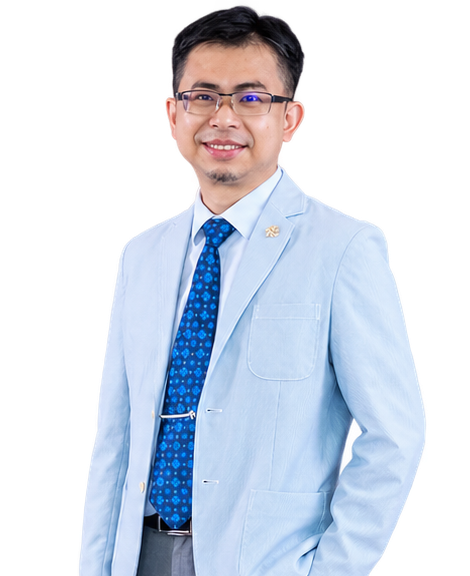 姓名: 張人懿 姓名: 張人懿
英文姓名: Chang, Jen-Yi
職稱: 教授兼副校長兼教務長
現職:
台南應用科技大學 副校長兼教務長
台南應用科技大學 通識教育中心 教授
台南應用科技大學 企業管理系 教授
電子郵件: tj0011@mail.tut.edu.tw
聯絡電話: 06-2532106 分機 321
辦公室: 行政大樓2樓 教務長室
|
|
學歷
國立成功大學工學博士,2010年
國立成功大學水利及海洋工程碩士,2005年
國立成功大學水利及海洋工程學士,2003年
|
|
|
專業領域
數值模式、偏微分方程、海岸與海洋工程、資料管理與數據分析、綠色管理
|
|
主要經歷
2026年8月迄今 台南應用科技大學 教務長
2025年8月迄今 台南應用科技大學 副校長
2023年8月至2026年7月 台南應用科技大學 校務發展中心主任
2023年6月至2025年7月 台南應用科技大學 永續環境研究中心主任
2022年2月迄今 台南應用科技大學企業管理系 教授
2022年2月迄今 台南應用科技大學通識教育中心 教授
2021年8月至2023年7月 台南應用科技大學語文中心 主任
2020年2月至2023年7月 台南應用科技大學通識教育中心 主任
2018年8月至2022年1月 台南應用科技大學企業管理系 副教授
2012年8月至2018年7月 台南應用科技大學企業管理系 助理教授
|
|
重要榮譽
2018年至2025年 台南應用科技大學延攬優秀人才彈性薪資
2018年 台南應用科技大學教學卓越教師
2017年 台南應用科技大學績優導師
2014年 台南應用科技大學績優導師
2010年 中華民國斐陶斐榮譽學會榮譽會員
2010年 第21屆公共工程金質獎「金陵營區排水工程」團隊成員
|
|
學術與專業服務
學術服務
台南應用科技大學 第13任校長遴選委員會 召集人
中國工程師學會第73屆理事會「指導委員會」執行秘書
中國工程師學會第73屆理事會「出版委員會」委員
台南應用科技大學 第12任校長遴選委員會 召集人
台南應用科技大學 採購小組 委員
台南應用科技大學 第11任校長遴選委員會 委員
國立海洋大學 碩士/博士論文 口試委員
國立成功大學 碩士論文 口試委員
國立高雄科技大學 碩士/博士論文 口試委員
光華高級中學專題發表 審查委員
科技部大專生專題研究計畫 審查委員
Topic Editor, Topic "Structural Stability and Dynamics: Theory and Applications", Participating Journals : Axioms(SCIE, Q2), Mathematics(SCIE, Q1), Symmetry(SCIE, Q2), Computation(ESCI)
Reviewer, Journal of Marine Science and Engineering (SCIE)
Reviewer, China Ocean Engineering (SCIE)
Reviewer, Engineering Application of Computational Fluid Mechanics (SCIE)
業界服務
2023-迄今 ESG永續策略管理師(AFNOR認證)
2021-迄今 禾畯企業有限公司 顧問
2014-2024 文盛車業有限公司 顧問
2018-2022 大地通環境生技股份有限公司 獨立董事
2013-2021 激發國際有限公司 顧問
2017-2019 嚐茗道有限公司 顧問
2013-2018 捷慶生物科技股份有限公司 顧問
2013-2015 松記茶業有限公司 顧問
|
|
精選期刊論文
- R. Gayathri, Jen-Yi Chang, Chia-Cheng Tsai*, and Tai-Wen Hsu*(2024). Wave Energy Conversion through Oscillating Water Columns: A Review, Journal of Marine Science and Engineering, 12(2):342.
https://doi.org/10.3390/jmse12020342 (SCIE&EI)(IF=2.774, R=4/16, Q1)
- R. Gayathri, Jen-Yi Chang, and Chia-Cheng Tsai (2023). Wave Power Extraction from Slanted OWC in the Presence of an Array of Arbitrary Trenches, Physics of Fluids 35, 097105.
https://doi.org/10.1063/5.0165164 (SCIE&EI)(IF=4.60, R=2/34, Q1).
- Jen-Yi Chang, and Chia-Cheng Tsai (2023). Step Approximation on Water Wave Breaking and Dissipation over Variable Bottoms across the Surf Zone, Journal of Marine Science and Engineering, 11(1):62.
https://doi.org/10.3390/jmse11010062 (SCIE&EI)(IF=2.774, R=4/16, Q1)
- Tai-Wen Hsu, Yi-Tse Tu, and Jen-Yi Chang*(2023). Case Study of Coastal Erosion and Measures at Ketzeliau Coast, Taiwan. Journal of Marine Science and Technology-Taiwan, 31(3), pp.260-272. :https://doi.org/10.51400/2709-6998.2702 (SCIE&EI)(IF=0.50, R=87/90, Q4).
- Jen-Yi Chang, and Chia-Cheng Tsai (2022). Wave Forces on a Partially Reflecting Wall by Obique Bragg Scattering with Porous Breakwaters over Uneven Bottoms, Journal of Marine Science and Engineering, 10(3): 409. https://doi.org/10.3390/jmse10030409 (SCIE&EI)(IF=2.744, R=4/16, Q1)
- Jen-Yi Chang, Ru-Yun Chen, and Chia-Cheng Tsai (2022). Hermite method of approximate particular solutions for solving time–dependent convection–diffusion–reaction problems. Mathematics, 10(2):188.
https://doi.org/10.3390/math10020188 (SCIE & EI)(IF=2.592, R=21/332, Q1)
- Chun-Lin Chu, Jen-Yi Chang, Po-Yen Chen, Po-Yu Wang, Shu-Han Hsu, Dean Chou (2022). Ge/Si multilayer epitaxy and removal of dislocations from Ge-nanosheet-channel MOSFETs, Scientific Reports, 12:959.
https://doi.org/10.1038/s41598-021-04514-y (SCIE & EI)(IF=4.380, R=17/72, Q1)
- Jen-Yi Chang, Ru-Yun Chen, and Chia-Cheng Tsai (2022). A comparative study on polynomial expansion method and polynomial method of particular solutions, Advances in Applied Mathematics and Mechanics, 14(3), pp.576-595.
https://doi.org/10.4208/aamm.OA-2020-0385 (SCIE&EI)(IF=1.961, R=48/267, Q1)
- Chang-Thi Tran, Jen-Yi Chang, and Chia-Cheng Tsai*(2021). Step Approximation for Water Wave Scattering by Multiple Thin Barriers over Undulation Bottoms, Journal of Marine Science and Engineering, 9(6):629.
https://doi.org/10.3390/jmse9060629 (SCIE&EI)(IF=2.774, R=4/16, Q1)
- Jen-Yi Chang, Ru-Yun Chen, Chia-Cheng Tsai (2020). Symmetric method of approximate particular solutions for solving certain partial differential equations. Engineering Analysis with Boundary Elements, vol. 119, pp. 105-118.https://doi.org/10.1016/j.enganabound.2020.07.009 (SCIE&EI) (IF=3.250, R=23/108, Q1)
- Jen-Yi Chang, Chia-Cheng Tsai, Der-Liang Young (2019). Homotopy method of fundamental solutions for solving nonlinear heat conduction problems. Engineering Analysis with Boundary Elements, vol. 108, pp. 179-191. https://doi.org/10.1016/j.enganabound.2019.08.004 (SCIE&EI) (IF=3.250, R=23/108, Q1)
|
|
學術識別
ORCID:
https://orcid.org/0000-0003-2790-0597
ResearchGate:
https://www.researchgate.net/profile/Jen-Yi-Chang
SciProfiles:
https://sciprofiles.com/profile/1659997
|
|
Biography
Professor Jen-Yi Chang received his B.E., M.E., and Ph.D. degrees in Hydraulic and Ocean Engineering from National Cheng Kung University, Taiwan, in 2003, 2005, and 2010, respectively. He joined Tainan University of Technology in 2012 and was promoted to Associate Professor in 2018 and Professor in 2022.
Throughout his academic career, Professor Chang has held several key administrative positions, including Director of the General Education Center, Director of the Language Center, Director of the Sustainable Environment Research Center, and Director of the Institutional Development Center. He has served as Vice President of Tainan University of Technology since August 2025 and as Dean of Academic Affairs since August 2026.
His research interests include numerical modeling, partial differential equations, coastal and ocean engineering, data management and analytics, green management, and sustainability governance. His scholarly work has been published in international journals in the fields of marine engineering, applied mathematics, computational engineering, and environmental studies.
In academic administration, Professor Chang is committed to student-centered learning, curriculum governance, teaching quality assurance, interdisciplinary education, and data-informed decision-making. He places particular emphasis on integrating artificial intelligence, sustainability, industry collaboration, and practical learning into higher technical and vocational education. Through institutional research and continuous quality improvement, he strives to strengthen student learning outcomes, professional competencies, employability, and long-term career development.
|
